When we think about our initial experiences with the discipline of science, schools are the first medium that one can connect this learning with. How much consideration or self-direct thought do we give ourselves or our children to relate to things apart from what the textbooks provide?
Our textbooks act merely as a repository of information. The activities, tasks or even images that are provided in the form of examples are judiciously contemplated and planned to be added by the curriculum and textbook designers. This is where the next question arises, how often are these experiments and tests given in the textbooks actually played out in the pedagogical practices that take place each day within the schools?
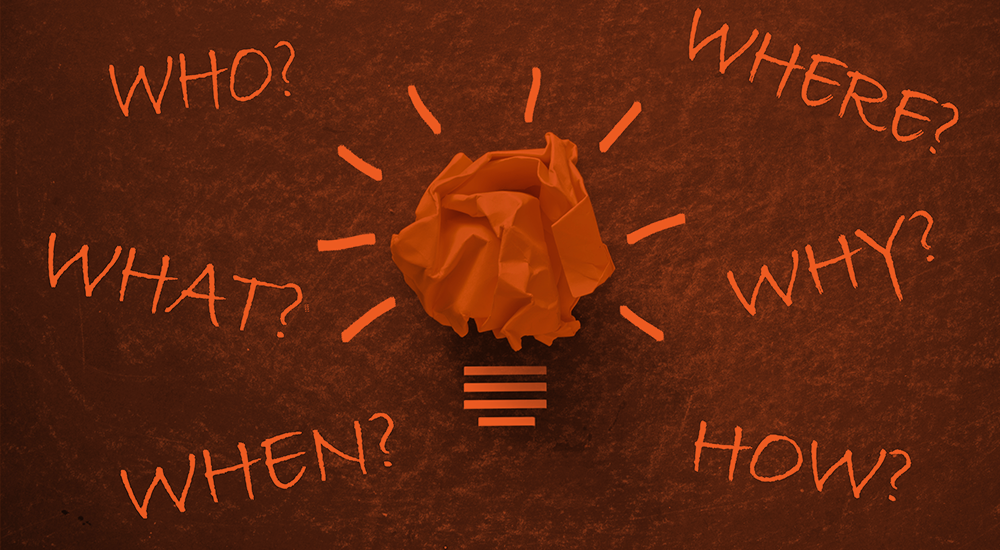
A child’s mind as tabula rasa is always inquisitive to identify the world around them. This curious nature is what I would like to call, the journey through and towards science. ‘Why?’- being a heavy word, is taken to very casually at times. ‘Why is the moon following me?’, ‘Why does the ball fall back on the ground?’ It is this probing nature that gives rise to the famous 5W’s and 1H in the important process of communication as well.
Every time a child looks at an object unknown, there is learning that takes place each time thereafter when the same object is looked at. Let us take a very simple example of even holding a glass. The inquisitive nature within the child holds it upside-down, feels it, analyses the shape and structure. It is later, when the same glass is dropped and is broken, does the child learn and realise the nature of the material of the given object. The next step could possibly be with the careful and gradual mimicking of an adult, the child further learns how to hold the object. As mentioned by Vygotsky, explaining a child’s ability to learn with the help of a ‘More Knowledgeable Other’ (MKO), referring to the stages of elementary mental functions- starting from; attention, sensation, perception and finally, memory. The classic difference between Vygotsky and Piaget, is that the learning and mnemonic nature in learning takes places culturally, whereas the latter believes that this ability towards the progression of learning is universal.
Thus, these cognitive functions begin developing very early within children. It is us, adults, who tend to occasionally ignore and oversee this curiosity and gambit ourselves out of answering something that could possible awaken the interest towards scientific beauty. Let us not stop looking at science just as an academic book each year, but notice and observe it in each phenomenon around us.

 Ranjani's Sepulcher